
Getting sweeper clearances wrong is one of the most common—and costly—mistakes I see on job sites. Last month, a contractor in Ohio burned through two sets of gutter brooms in three weeks because the clearance was set too tight. The bristles wore down to nubs before the first oil change. That's not a parts problem;it's a setup problem.
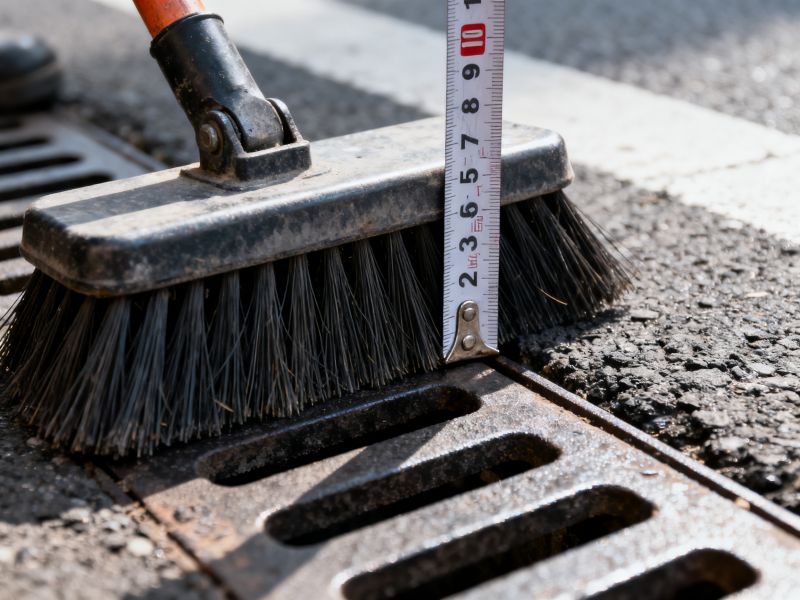
Start with the basics: sweeper clearances refer to the gaps between the sweeping tools and the surface you're cleaning. For a typical mechanical broom sweeper, you've got three critical zones—the main cylindrical broom, the gutter brooms, and the squeegee or vacuum head if it's a regenerative air machine. Each has its own spec, usually found in the operator's manual, but manuals don't tell you how to adapt when you're facing packed snow。fresh asphalt, or a parking lot full of sand. That's where experience kicks in.On the main broom, a common starting point is a clearance of about 1/8 to 1/4 inch (3–6 mm). You want just enough contact to flick debris without dragging the bristles. I've seen guys crank it down until the broom stalls, thinking more contact equals cleaner pavement. Wrong. That just wears the bristles unevenly and can scar the surface. For gutter brooms, aim for a light kiss—maybe 1/16 inch (1.5 mm) of bristle deflection against the curb. Test it by sliding a piece of paper under the bristles;if it pulls out with slight resistance。you're close. Too loose and you leave a strip of dirt;
too tight and you're replacing brooms monthly.Adjusting sweeper clearances isn't a one-and-done deal. Temperature changes matter. Bristles stiffen in cold weather, so a clearance that works at 80°F will be too aggressive at 30°F. I always tell operators to recheck after the first hour of a shift。
especially in spring or fall. Also, surface type plays a role. Smooth concrete tolerates tighter clearances than rough, porous asphalt where bristles can snag. And if you're sweeping around decorative pavers or stamped concrete, back off the clearance by at least 30%—those surfaces cost too much to scratch.One more thing: don't ignore the squeegee or vacuum head clearance. On air machines, a gap larger than 1/8 inch (3 mm) lets fine dust escape, defeating the purpose. I've measured gaps on rental units that were over half an inch—no wonder the dust plume was visible from the cab. Check it with a feeler gauge, and adjust the linkage until it's snug but not dragging. Sweeper clearances are the difference between a machine that cleans efficiently and one that eats parts. Spend ten minutes with a manual and a gauge before your next shift. Your broom bristles—and your budget—will thank you.